Friday, May 15, 2015
Thursday, May 7, 2015
Kindle Mag talks about My Clingy Girlfriend and other best selling novels
Madhuri Banerjee was irked at being labelled a chick-lit author, until she realised that it was what sold. Devjani Bodepudi tries to get her to spill the beans on how to make it big.
There is no real recipe for success, no magic formula which will guarantee that a book will sell millions and millions of copies and turn its author into a household name. We’ve been told this countless times and yet, there are a few writers out there in our literary cosmos who seem to have stumbled upon the fabled fairy dust, which made their books float up into the hallowed ether of a bestsellers list.
I had the very real honour of interviewing one such writer a few days ago. Madhuri Banerjee writes books we all want to read. I mean they’re funny, insightful and most importantly full of useful titbits about that elusive thing called love.
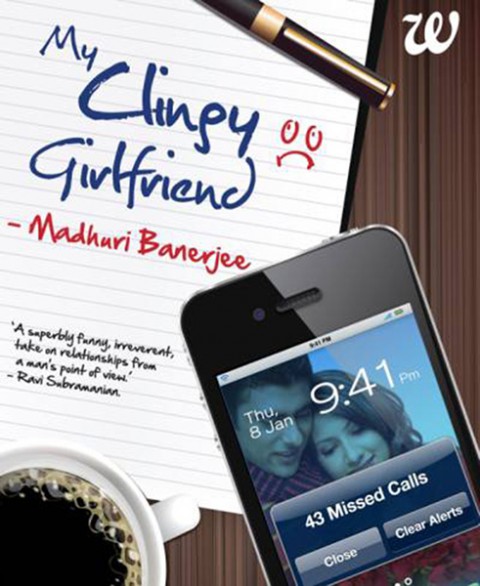
My Clingy Girlfriend, her latest bestseller, is a very clever take on love and relationships from a man’s POV. The word which immediately popped into my little head, upon realising that the protagonist was Obrokanti and not Oindrila, was ‘genius’.
Banerjee had managed to crawl inside a man’s head, rummage around and pick out the most essential bits that all us girls need to know to give us a realistic picture of how a man thinks. For your information, 50 percent of men, according to Banerjee, are riddled with a certain amount of self-doubt, uncontrollable lust and ultimately are completely clueless in the ways of love. As her opening line confirms: “I can honestly say that I, Obrokanti Banerjee, know jack shit about love. Nothing. Nada. Zip.” And yet he has managed to bag himself a beautiful girlfriend, whose only flaw, it seems, is that she’s a little clingy. I mean, stereotypically clingy for full comic effect. Incidentally, Banerjee also told me during her interview that Radha, our hero’s girlfriend is a representation of 50 percent of women. These percentages were then jacked up to a rough 80 percent to suggest that in the world of her newest commercial success, four out of five men and women behave and think exactly like this. It was indeed a riotous read.
I really was in awe of such insight and use of statistics!
Banerjee had managed to crawl inside a man’s head, rummage around and pick out the most essential bits that all us girls need to know to give us a realistic picture of how a man thinks.
I managed to reign in my excitement just long enough to ask her about the very important issue of designing the cover. After all, so many books we see on our shelves today, which belong to the commercial fiction genre are clad in covers which give the reader a very good idea of the contents.

I can happily confirm that Banerjee had a lot of input on her cover. She actually wanted it to look that way! Did her creativity know no bounds, I asked myself.
I contemplated the other books we see on our shelves, the so-called classics and I wonder why they chose the artsy-fartsy route instead of the explicit, in your face, tell-it-like-it-is cover. Perhaps they would sell better if they chose a lipstick smudge superimposed onto a silhouette of an intense looking couple walking in the lamplight under an umbrella.
I then got onto the task of asking Banerjee about the content of her books. Did she feel pressured by her publishers to steer clear of subjects such as abortion? “No,” she replied. They accepted every idea she gave them as long as she didn’t want to do literary fiction. Literary fiction didn’t do well in this market. I mean it’s true. Who wants to read anything of any quality? Sorry, substance? I mean difficult? I mean…never mind!
Gone are the days (or maybe they never existed) where people would read books which commented on society, which reported on the injustices of our time, which highlighted the beauty of the everyday. We simply don’t want books like that anymore. Or is that we don’t want women to write these books anymore? I ask this because the Man Booker Prize had only two women on their shortlist last year. Or is it *gasp* that women will never be good enough to win a literary award, unless of course it’s an award specifically designed for women, such as the controversial Bailey’s Prize for fiction?
One particular chair of judges, Lola Young, commented that the British fiction by women that they were asked to appraise fell into two categories, either “insular and parochial” or “domestic in a piddling kind of way.” What would she make, I wondered, of the Indian scene and Madhuri Banerjee and some of our other worthy writers?
I shook away the idea as soon as it entered my head. We don’t need women writing good books—I mean literary books of any substance. We women need Banerjee’s particular blend of writing to warm our cockles and satisfy our fantasies.
Jane Austen’s Pride and Prejudice, for example, essentially belonged to the chick lit genre, it could be argued. I’ll skirt over the social commentary that Austen often engages in her books, I’ll side-step her clever use of satire and sarcasm when dealing with her characters, because that’s hardly important. What is important was the sexual tension between Mr Darcy and Elizabeth Bennett.
I wanted to ask Banerjee about the ‘Chick Lit’ label, to get inside the head of such a wonderful writer who possessed said label would be invaluable. She told me—and I would have to agree—that every woman loves a bit of ‘chick lit’. Romance is great, be it Pretty Woman or Notting Hill. Although she was irked at first at being labelled a chick-lit author, she realised that it was what sold. And she did indeed sell.
And when I thought about it, I was forced to ask, “what really is chick lit?” Isn’t it books, written for women, about women and about women-centric issues? Women make up at least 50 percent of the population, so for there to be a genre dedicated to the things that affect us the most, such as falling in love with a tennis player, or our husbands turning out to be impotent (themes explored by Banerjee), then we should celebrate that. She’s embraced the label now, at a time when we need it most. And she’s selling well, because she’s awesome at it.
What we deem as classic now, Jane Austen’s Pride and Prejudice, for example, essentially belonged to the chick lit genre, it could be argued; with her long-frocked protagonists paving the way for Bridget Jones and the likes of Chetan Bhagat’s glorious cast of social caricatures. I’ll skirt over the social commentary that Austen often engages in her books, I’ll side-step her clever use of satire and sarcasm when dealing with her characters, because that’s hardly important. What is important was the sexual tension between Mr Darcy and Elizabeth Bennett.
We certainly don’t want literature written by women which will allow us to glimpse into family and dilemma and history and social politics. We should leave that to the men.
Moving on, I wanted to explore the idea of feminism and what it was. Commercial fiction seems to lend itself perfectly to be a platform for women to express themselves and talk about their very important needs. In Banerjee’s book Scandalous Housewives, very real, aching issues are explored. Things that women should be talking about and taking control over. Things like wanting kinky sex or having an affair with one’s brother-in-law and saying, “enough is enough…my husband treats me like furniture and I won’t take it anymore!” or the woman who decides her life is about herself and not the men in her life, it’s all really very empowering! And women, especially in this country, are battling these issues every single day. I’ve conveniently forgotten the women who are forced into labouring in the sun for the building of our roads, without proper safety equipment, I’m not going anywhere near female foeticide and I won’t even get started on caste. The real, very important issues are the ones highlighted in Banerjee’s books and books like hers. And we love them!
We love to be immersed in the lives of women and men just like us, or exaggerated versions of us, with dilemmas like crazy clingy girlfriends who only exist everywhere. We certainly don’t want literature written by women which will allow us to glimpse into family and dilemma and history and social politics. We should leave that to the men.
Chick lit, especially Banerjee’s particular brand (because she’s a feminist remember?), challenges patriarchy, according to her. Maybe she’s being satirical by penning a portrait of the most patriarchal fictional figure I have ever come across, in Obrokanti Banerjee, and then making us feel sorry for him because his girlfriend and all subsequent female characters in the story are manipulative, bossy, constantly in need of reassurance and are obsessive about their man. Obrokanti is quite right in being turned on by the suggestion of virginity. Long flowing locks and doe eyes are high on the list for judging quality and worth. Breasts are compared from one woman to the next and of course, we are led to believe this specimen of Bengali manhood is just struggling to get by in a world filled to the brim with crazy women who want to bed him and possess him in every possible way.
Iasked Banerjee again what the secret ingredients were for a bestseller. I was more direct this time; it was infuriating that I did not know yet. Her reply was a tinkling laugh. “I wish I knew,” she said. She gave me the example of one book, Mistakes like Love and Sex, which was all set to become a bestseller, “but since it was about a woman and trying to find her sexuality, and it came out during the whole Nirbhaya incident in Delhi. And everybody, the entire country was talking about rape and here was my book talking about a woman trying to find her sexuality. [She] just clashed with the time it was released, you know what I mean. So if that book was released today I think it would do really well.”
In Banerjee’s book Scandalous Housewives, very real, aching issues are explored. Things that women should be talking about and taking control over. Things like wanting kinky sex or having an affair with one’s brother-in-law, or the woman who decides her life is about herself and not the men in her life, it’s all really very empowering!
OK, so now I knew what not to do. If I wanted a bestseller, I had to make sure that it was released when there were no inconvenient controversies happening, like the Delhi gang rape of 2012, and then I would be halfway there.
But really, there was no secret formula that she could give me. What I gleaned from our little chat is that chasing success, like chasing love, was futile. What mattered was that you did what you did, because you were passionate about it. “[It] is just a changing time that would make your book a bestseller and it has nothing to do with you and your potential…[It’s important to] keep going, to keep on working and hope that [you produce] bestsellers…”
The final words of wisdom Banerjee had for me, were related to a storyline I presented to her, for a movie I would like to make some day, when I have grown enough as a writer, I suppose. It holds enough truth about life to last, well, a lifetime. It was a dialogue she suggested for my female protagonist’s man-hating, potentially bisexual best friend, to be played (hopefully) by Kalki. “Don’t be stupid! Love doesn’t have any pacts,” Kalki says to Deepika when Deepika doesn’t notice Saif’s devotion to her. And perhaps you cannot make a pact with success, either, if writing chick lit is what you love.
“Love. Doesn’t. Have. Any. Pacts.”
http://kindlemag.in/secret-success/Saturday, May 2, 2015
5 Tips on How to Pick Up Books
| A part of one of my bookshelves |
So here are 5 tips to buy books and read more this summer!
1. Mix Genres - Every book store and online mart has books by genres.
Fiction, Nonfiction, Self-help, Travel, etc. It’s easy to go to a books store
or online and go through the genre you really like. But what’s even more
interesting is to pick up a genre you’ve never read. If you’re a hard core
romance person, why not try a self-help book? If you only like reading
thrillers, why not glance at a travel book? Don’t limit yourself to what you
like. There’s a whole world of books out there that you should be reading to
expand your knowledge and understanding of the world and develop your
personality!
2. Mix Fat and Thin – Some people like only reading thin books so they
can get through a lot of books soon and say “Oh I’ve read fifty books.” But the
purpose of reading a book is to do many things – entertain you, or educate you,
or make you think, or suck you into a world that you’ve never imagined and
enlighten you. What it’s not supposed to do is make you brag about how quickly
you read it. So for every three thin books you read, find one that is at least
400 or more pages and read that!
3. Covers & Colours – Sometimes we like the cover of a book and we
pick it up. Most often it’s the mood we’re in that draws us to the colours of
the book. Say you want to read something new but don’t know what you feel like
buying. Close your eyes and imagine a colour. Let the colour embrace you. Then
if you’re in a book store, go and find 5 books with that colour on the cover. Or
online type the colour and see how many books you find with the colour as a
title. You’ll see that you’ll find a story that you may want to read!
4. Blurb and Bestsellers – Often we pick up a book for the genre, the
cover and/or because it’s a bestseller but we don’t read the blurb. The blurb
is the most important part of the book. It actually takes longer for an author
to write the perfect blurb than write out characters for their novel! It’s the
brief synopsis that goes on the back cover of the book. It tells you what the
book is about, the characters, the era when it is happening and maybe a twist.
I urge people of all ages to always read the blurb before buying the book. Let
it appeal to you. Let the story sink in. Do you want to know more about it?
Then only buy it. Never buy just because it’s a bestseller and everyone is reading
it. You might actually hate it later and kick yourself for wasting money
instead of buying another less popular book with a better blurb!
5. The First Chapter & Classics– Every good fiction author takes
plenty of time to write his first chapter. This is the hook for the reader to
get into the book. I would recommend that you always read a sample of the book
which is generally the first chapter before you buy a book. Often we are
expecting the same thing since we are prone to like only one genre. I would recommend
that everyone tries something new at least once in three months. Pick up an
author you’ve never read, a genre you’ve never tried or a classic book like Charles
Dickens or Thomas Hardy or Naipaul or Forester that it very different. Open up
your reading to vast experiences and you’ll be rich with stories for the rest
of your life.
Tuesday, April 28, 2015
Thursday, April 23, 2015
Buddhism, Mandalas & House of Cards
I was watching Season 3 of House of Cards when
I saw Buddhist monks in episode 7 making a mandala.
According to the Berzin Archives and Wikipedia, "A Mandala is Sanskrit for circle. It is a spiritual and
ritual symbol in Hinduism and Buddhism, representing the Universe. Mandalas often
exhibit radial balance.
The sand mandalas are unique to Tibetan
Buddhism and are supposed to give purification and healing. A great spiritual leader
chooses the mandala to be created. Then Monks create a drawing from memory and
begin to fill it in with colourful sand. Grains of sand are carefully placed
along the drawing with funnels, tubes, and scrapers over a few days, weeks or
months. As the monks do this, they recite sacred chants to the divine spirits
to meditative music. According to Buddhist scripture, sand mandalas transmit
positive energy to the environment and the to the people who view them. Once
it’s completed, the mandala is blessed and the sand is swept away,
first broken in half with grey sand and then slowly from outward to in,
sweeping the sand into a mesh of grey particles and then it is disposed of in
water in what’s called
a “Dissolution Ceremony.”
At its base, the ritual of
constructing and dismantling a mandala represents the transitory nature of
life, the way things can be at once present and then removed and just because
it’s been removed, doesn’t mean it wasn’t once there."
So first I wanted to marvel at the writers of
House of Cards of thinking to bring it in. A power couple who have had terrible
strife till now renew their vows in this episode. The mandala seems to have
healed them. It also shows the passage of time since a month passes by and the
monks come and go. It shows how Frank is so busy with his work that he is
unable to see the beauty in it. And Claire goes so close that she almost ruins
the mandala, as she does with all her decisions in season 3. It also shows how
both of them are struggling to leave a legacy and how right under their nose
Buddhism is teaching them that nothing is permanent. Life, our legacies and our
desires are all temporary. It was a beautiful way of showing a dichotomy of a
power couple against a spiritual message.
The sand mandala made me realise something
about myself as well.
All these years I’ve been struggling to leave a
legacy for my daughter. Maybe even for my generations to come. I have been working
hard to etch things in bestselling paperbacks that has fed my ego and burst my
bubble many a time.
I wanted to say I’m truly successful at what I’ve
tried to do. I’ve achieved what I set out to be. I have miles to go because the
legacy is not done yet. So much more work to be done. So much more writing
before I die.
And in that moment when the mandala was done, I
could feel that the Monks would be proud. What an achievement. Back breaking
work over a month to put tiny grains of sand to make the most incredible and beautiful
piece of art ever. And within a single stroke of breath the Dissolution
Ceremony began and the piece of work, was all gone.
And I looked at all my six books. Why the hell
was I so proud of them? What legacy was I even thinking about? It was important that I did the work. But one should never hold on to the pride of doing it. A Mandala
represents wholeness, a cosmic diagram reminding us of our relation to
infinity, extending beyond and within our bodies and minds.
When Monks can stand and chant while they see
their hard work of a beautiful creation turning to ash, I needed to realise
that I was just a small part of this Universe. I must extend myself beyond my
creations, a legacy and my ego, to go beyond my body and mind to be one with
infinity.
The Dissolution Ceremony of the Mandala shows nothing
is permanent. Nothing is ever lasting. Nothing is going to remain forever. Not
even this moment.
That piece of work was made
to heal you at that time. It gave you
a sense of purpose, reason, love, belonging, identity. And we must realise and
understand after a single moment of breath, it is all gone. It was important at
that time. But you cannot hold on to
it forever. The accolades, the dissent, the brick bats, the anger, the praise,
the love, the hate for what you created, what you believed was wonderful and what
you thought was permanent is nothing but a moment that was given to you to
realise and then extend beyond.
The meaning of a mandala is that which
encircles a centre. What is our centre? Our ego? Our spiritual being? Our love?
Maybe it is our “nothingness.” We came from nothing and we will become nothing.
There is no such thing as a legacy. That’s just history.
Does that mean we stop working? Not at all.
Because we need to do the things that we’ve been chosen to do. That book I’m working
on. That presentation you just finished. That child you just fed. That art that
you just completed. They were all necessary. As long as you know that it’s not
what defines you.It's what Lord Krishna says in the Gita about Nishkarm Yoga. "Doing your work without expectations."
So I realised long after I finished watching
the show that we can do our best every day and then let it be. I know we’ve
heard it one million times. But in this we must not let our ego come in. And we
must know how to let the beautiful thing we made, worked on and created be
free. If it stops meaning anything, if we stop asking for “what we deserve” and
stop wondering “why we’re not getting” things or pained by “what is happening
to us” then we have truly understood the meaning of the mandala, of the essence
of life and of who we really are.
That was my spiritual awakening. Let me know
about yours. Wednesday, April 22, 2015
Chef Vikas Khanna Loving My Clingy Girlfriend
International Acclaimed Masterchef Vikas Khanna tweets this about my new novel
My Clingy Girlfriend
What an awesome fun book by @Madhuribanerjee. Loving it http://t.co/xOcmkoXsph.
My Clingy Girlfriend
What an awesome fun book by @Madhuribanerjee. Loving it http://t.co/xOcmkoXsph.
My day is made!
Tuesday, April 21, 2015
5 Ways to NOT Be a Clingy Girlfriend
Stop Constant Questions – Where are you? When are you coming
home? When are we meeting? What are you thinking? What are you planning for our
anniversary? When should we meet? Why aren’t we getting married? The constant
questions will make your boyfriend run from you faster than a zebra from a
lion. Maybe he doesn’t have all the answers. Maybe he needs some space. Give
him time to call and chase you a bit. Keep the mystery alive.
Stop Going For His Boys Nights – He has a life beyond you. He has
friends he likes to drink with. This is his support system! Stop landing up for
his Boys Night Outs to spend time with him. Soon all his friends will hate you
and ostracise him. And ultimately he’ll resent you. Give him that one night a
week or month off to just enjoy himself and get sloshed, without you giving him
grief the next day. He’ll love you more.
Stop Asking About Marriage – Everyone wants to know where the
relationship is going as soon as the third date is over. Some men don’t want to
get married. It’s not that they’re commitment phobic, it’s just that they enjoy
their space and freedom as much as they love you. Think about an alternate life
with him if he’s not ready for marriage. Redefine your relationship. And if you
truly want to get married and your “biological clock is ticking” set a deadline
and move on if he’s still not ready, instead of pushing him into it and
regretting it later.
Stop Comparing – Your best friend is getting
married, another is going on a Europe tour with her boyfriend and another has
been introduced to his parents. Instead of whining, demanding and comparing
your relationship to others, realise what you have. Does he love you? Does he
listen to you when you talk about your dreams? Does he give you space and
support you? Does he look after you when you’re upset? Those are good things in
a relationship. Treasure them and cherish him. Don’t demand him doing it all
the time. Sometimes he doesn’t have the bandwidth to support, listen or love
you. Doesn’t mean he can’t later. Give him time.
Stop Being Suspicious – He liked a girl’s photo on
Facebook. He must be cheating on me! He is having a coffee with his old school
friend. He’s probably cheating on me! He has a girl on his team at work?! He is
definitely cheating on me! Stop getting suspicious. If you’re cool and easy
about the girls in his life, he’ll appreciate it. But the more you lock him
down about every female he’s spoken to, he’ll hate you. It’s ok to be
possessive and a little jealous. Let him know how much you lust after him and
hate it when anyone else does so too. By giving him space to make a choice, he’ll
never want to leave you.
For more laughs buy My Clingy Girlfriend here: http://goo.gl/VwPjmN
Subscribe to:
Posts (Atom)
Reserved for One: A poem
We don't trust enough We don't pour out our hearts Telling all our secrets, our fears and surrendering to each other. Comple...
-
Dear Love Guru, I am in love with a man but he says he can’t be in love with me just yet. He has been in a bad relationship and needs tim...
-
Chaldean Numerology: Calculate the number your name adds up to. Ideally if it matches the date you were born, it is supposed to be luck...
-
It’s time. You know it. You’ve waited long enough. The grown beard and the manly chest fur only proves that you’ve become a man. You’ve matu...