Tuesday, March 22, 2016

5 Relationship Advice Therapists Will Tell You


1.     Accept, Respect & Space– Your partner will have a difference of opinion on some issues. He is not your clone. Let him have his ideas. You don’t need to argue to prove you’re right and you don’t need to sulk because he disagrees with you. If there are serious health issues you are arguing about, find a way to convince him. Don’t try to change your partner but motivate them to look at things differently if it’s really important to you. Respect the choices he makes and give him space to deal with issues in his own way rather than telling him how it should be done says Dr. Shefali Batra psychiatrist and co-founder InnerHour.

2.     A Relationship Can’t Complete You - Don’t lose your identity in a relationship. Who are you? What are your dreams? What are your goals? What if your partner wasn’t there? What if he walks out on you tomorrow? According to Dr. Amit Malik, founder at InnerHour, women need to define themselves outside of a relationship. Only then will couples not take their partners and relationship for granted. When you are happy with yourself you will be happy within the relationship as well. And within the relationship women need to find boundaries. Just because you are a strong working woman outside, you don’t need to be submissive and apologetic for it within a relationship. A relationship he adds should enhance your life, not deplete it.

3.     Communicate About Expectations – You want him to come home early. You want to go for a drive. You want him to attend family functions with you. Every couple has expectations from each other. It’s important to converse what you want and then allow the person to do the things you want, or not when he’s ready. Don’t badger him into doing things as per your time schedule says Dr. Shefali Batra. Understand when he’s not willing to make certain changes. Let those go. Also many times women keep their expectations to themselves hoping the man she’s spent so much time with, to understand her. Men aren’t mind readers. You don’t always need to fulfil his expectations and desires. You need to voice yours as well and remind him occasionally if he forgets.

4.     Boost & Market Yourself – For most women when they enter a relationship, their entire life becomes the man and when married, the home. Soon they start questioning what they have actually done in their life. There get no validation in the house. Gitali Chatterji, Senior Psychologist at Inner Space says it’s very important to build your self-esteem. Even if you don’t have a job, understand what you’re doing at home is important. Recognise past instances where you’ve solved tricky situations and appreciate yourself for it. Sometimes it’s also important to remind your partner of all that you do for him. Boost yourself up a little in his eyes. Market your capabilities by saying something as innocent as, “I’m glad I could help you solve that situation otherwise it would have been a complete disaster.” Or, “Imagine if I wasn’t there to cook/ clean/ manage that for you. You would have taken much longer to tackle/ complete it.”


5.     Pause Before Reacting – One of the most important things anyone can do in a relationship, according to psychologist Gitali Chatterji is to pause before reacting to their partner. It’s very easy for women to be affronted by what the man says, or react to him in a negative way and then analyse where the fight began and how it all became sour. Suppose the man has said something that you weren’t expecting, instead of immediately snapping back, just pause and think if it’s important to react in a negative way and what else could he have meant. Maybe the man has behaved badly for some reason and your instant reaction is to scold him, tell him off, have a fight and prove how hurt you are. Pause. Is it the correct time to talk about it? Is it something that is very important? Can you change your tone if you’re about to speak? Gitali says that split second thought that have before reacting could save a relationship and two people from a lot of angst. 

Saturday, March 5, 2016

The Child, The Adult, The Parent


Have you ever felt that you’ve gone into a meeting and not known what to say or floundered too much? Have you ever scolded your child and felt bad about it? Have you felt that sometimes you’re not able to stand up for yourself in relationships?

Erik Berne, a psychiatrist in the 1950s created the theory of Transactional Analysis to explain human behaviour for situations that happen in our daily life. He said that we all have 3 ego states of Parent, Adult and Child that we constantly use.

A Parent state is: A response in which people think, feel and act like their parents used to with them. A sheer mimicking rather than an understanding. For example, a person may shout at someone out of frustration because they learned from an influential figure in childhood the lesson that this seemed to be a way of relating that worked. (Ref https://en.wikipedia.org/wiki/Transactional_analysis#The_ego-state_.28or_Parent.E2.80.93Adult.E2.80.93Child_.28PAC.29.29_models)

Adult: “A state of the ego which is most like an artificially intelligent system processing information and making predictions about major emotions that could affect its operation.” Used for relationships, work places and managerial duties.

Child: A state in which people behave, feel, and think similarly to how they did in childhood. For example, if they are praised, they will laugh and dance and if they are criticised they will feel upset and may cry.

This is Berne’s theory of Transactional Analysis for which he has written Games People Play and several other books.

So most of us would say, isn’t this obvious? Don’t people behave like this in any case?

So I had a slightly different take on the Child, Adult, Parent Theory.

Suppose the Child state in us is just a free, natural person who wants to be loved and gives love freely. Our inner child is someone who requires nurturing, pampering, adulation and is hesitant about the outside world, of all those people in a groups and is trusting of just a few who he really loves. The true 5 year old. Imagine if this person enters a work place and has to deal with powerful bosses and cranky co-workers. They’ll most likely throw fits at work, want special attention and may get terribly upset if criticised.

An Adult manages that.

The Adult state is the one where the person has power or control over their relationships, they’re able to balance their duties and responsibilities at work and stand up for themselves because they understand what it’s taken for them to be there. 

An Adult state of being is a person who doesn’t let fear rule their decisions. An Adult ego is someone who is more calculating, manipulative and figures out strategies that work best for him. An over active Adult state without the Child or Parent state could lead to someone who is selfish, narcissist, dominating and may not have balanced relationships.

A Parent state for me, is very different than what Erik Berne defined.

The Parent state is one of the ego or soul longing for more in life than wealth, fame and success. It’s the desire to just be searching, questioning, grasping for a higher light, a deeper meaning, inner truth, living in the moment, and extreme mindfulness. Most people who are just in this state will have given up most of the worldly pleasures to focus on doing something for humanity, or finding something deeper about themselves or the world in general. 

The Parent person is also a very giving person. If you’re in this state you’ll feel like giving advice, generally helping people, nurturing someone, or just being alone to meditate, seek answers from within, etc.

So how do we apply this in our daily lives?

First of all, we need an awareness that these 3 states exist within us and they can switch in a moment or take an extended period of time. Most people can behave in just a Child state in a work environment or in their relationships their whole lives, unable to understand why they are failing at both. 

If at work you are aware of these states you’ll acknowledge if you’re behaving like the Child, Adult or spending too much time as the Parent that is affecting your work.

Are your reactions immature (Child)? Are you just wanting to give up everything and go to the hills (Parent)? Or are you taking in the information and forming a strategy in your head before responding (Adult)? 

In relationships, are you over nurturing, allowing your partner to make many faults while you cover up for them? (Parent) Are you looking for attention, feeling insecure and fearful of what could happen? (Child) Are you dominating and emotionally unavailable sometimes because it’s a strategy to not be vulnerable? (Adult)

As a householder are you too aloof, into your own thoughts, not caring about the world and what is needed to survive? (Parent)

Transactional Analysis is then a way to alter your ego state to the situation to solve your emotional problem.

This comes through an inner dialogue of the different psyches.

Berne believed that these states are largely formed through childhood. I believe that childhood has a part to play in the formation but each moment that we have to choose the state plays in the development of which state becomes stronger.

You will find many successful people who are just in the Adult state. They have the Parent lacking in them.

Many people who have a very developed Child aspect in them but not the Adult state will not be able to fathom why they’re not taken seriously.

An over active Adult who doesn’t have a balanced Child ego will feel jaded and bitter with life. A Child ego brings wonder, happiness, hope and dreams and is the state that can tap into the subconscious level as well.

So the next time you’re going for a meeting, know that you need to be an Adult there. And when you’re in a relationship, maybe in that moment you can be a child. And find moments in your life to truly be the Parent and seek out a deeper truth and meaning of life.
And always be consciously aware of what you’re choosing and why!


(Inputs from Anuraadha Tewari, Writer & Director) 

Monday, February 29, 2016

Book Review: In Other Words - Jhumpa Lahiri.


I am reviewing this book under the Flipkart Book Review Program.

It is my unbiased opinion.

Jhumpa Lahiri’s new book In Altre Parole is a memoir written in Italian and translated into English In Other Words about her journey to find her identity through language. Born as a Bengali Nilanjana Sudeshna, Jhumpa has recreated herself several times through her books bringing out the issues of exile, alienation and identity. In her first nonfiction attempt she chooses to give us a glimpse of the two years in her life when she moved from USA to Italy where she stayed with her Spanish husband and two children (Octavio and Noor, again breaking from the true form of identity through name for them.)
The book is beautifully written, full of angst of the author to find a new voice and identity through language. In the world, there are Trans Gender people who want to completely change themselves because they feel they belong to the other gender. Jhumpa is “trans linguistic” because in her heart she feels she is neither Bengali even though she was born to Bengali parents nor English because she was raised in London and USA but feels more Italian because she chooses it and intrinsically had felt so for many years.
While the book is interesting to read, after a point the reader may feel “What’s the big deal? It’s only a third language she is learning and we know Hindi, English, Marathi, Bengali and even French or Spanish!”

The book is evocative, truthful and a slice of Jhumpa Lahiri’s life and work. Not many authors have crossed over to new languages to write and Jhumpa through “In Altre Parole” urges writers to go beyond their comfort zones and to do more for their craft. But more than that it didn’t leave me as riveted as The Lowland or The Namesake. I hope Jhumpa continues to write stories in English, not just for the awards that she will gather no doubt, but because she has the gift of storytelling that must not die in any language.  

Sunday, February 21, 2016

Forbidden Desires


‘Why do romantic relationships fade away? Does the magic slowly die? Or do lovers simply wake up one morning realizing they are done? Is it a trick that time plays on happy couples or is it something more profound, an evolution perhaps, of our feelings and our needs?’

Imagine if there was a person you don’t know anything about, who was slowing destroying your marriage.

Imagine if there was a stranger who entered your life and made you realize you were living a lie.

Imagine if there was a love so deep that you needed to sacrifice everything you have to save it.

Imagine if you found out your partner was cheating on you.

What would you do?

Naina, Ayesha, Kavita and Kaajal are four women who know nothing about each other’s lives and continue to live in their own secure world. Until one day, they’re forced to reckon with their shocking truths that they never imagined!

Their desires will come to haunt them, provoke them and make them fight to choose a new path in their lives.

Will these women survive their stories of passion, betrayal and pain? And is there a larger mystery that binds them together?

Best selling author and film writer Madhuri Banerjee brings to you a new romance thriller that interweaves different stories of women and their passions and how all relationships ultimately crash into each other.

Available at leading book stores and on Amazon: goo.gl/5vyF7Q Flipkart: goo.gl/Y7eOIe

Sunday, February 14, 2016

How To Judge a Man in Bed by the Coffee He Drinks!


The type of coffee you order can reveal a lot about your personality and how you are in bed!
“Clinical psychologist Dr. Ramani Durvasula recently conducted an observational study of 1,000 coffee drinkers. As Dr. Durvasula notes in her book entitled You Are WHY You Eat: Change Your Food Attitude, Change Your Life, despite the interesting and impressive qualitative research that was gathered “we are no more defined by our coffee orders than we are by our astrological signs.” (http://psychcentral.com/blog/archives/2013/09/11/what-does-your-coffee-reveal-about-you/ )
So I researched further and found out the correlation between coffee and men. I could judge how a man is in bed by the coffee he ordered! The following observations are based on what men would order in a café, not what they have every day at home. (This is not an exact study and results may vary.)
1.   Men who drank black coffee were generally more traditional minded, quiet in groups, efficient, no nonsense kind of people and didn’t like to experiment in bed even though they were very passionate lovers.
2.   Men who drank cappuccinos and lattes were kind of easy, laid back people with a love of music, films and very giving in bed.
3.   Men who liked iced drinks are quite fun to be with, have a great sense of humour, sharp, intelligent and love experimenting in bed though they could be commitment phobic.
4.   Men who like their coffee with a little bit of milk and sugar might want to please too many people and be balancing too many things in life and can feel overwhelmed sometimes in life and in bed.
5.   The men who had instant coffee were procrastinators, quite absorbed in themselves and didn’t have fantastic relationships though they were very creative and good looking!
6.   The double decaf, soy, extra-foamy men tended to be more obsessive, controlling, and detail-oriented. Their sex life could be very “organised” and pencilled in.
It’s quite interesting to find the choices we make are directly related to the coffee we have. And not surprisingly as we grow older, our preferences for how we have coffee changes as well. If you observe this phenomenon further you’ll notice how as your coffee inclinations change so will your needs of your partner. Most often we start drinking the same type of coffee our partners do and invariably we can see a change in our personalities as well. When I was younger I had cappuccinos and dated a man who had cappuccinos as well. We had a live in relationship and were quite care free then. When I switched to black coffee with hazelnut I found a partner who was a black coffee drinker as well. You can guess what my sex life was! And now I have brewed coffee. Dark roasted. With sugar. And I can’t date a cappuccino man anymore!
Too much coffee can have negative effects on the health. Ideally two medium cups of coffee a day should suffice for your caffeine needs and your sexual desires!
So next time you want to date a man, don’t ask him his astrological sign, ask him how he takes his cup of coffee!

From Lovers to Brothers. Conscious Uncoupling.


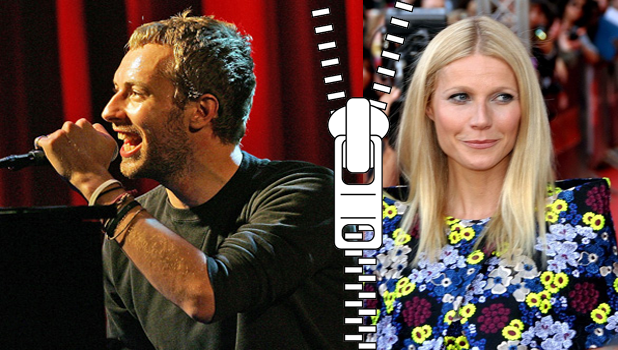
Recently actress Gwyneth Paltrow said that her ex-husband Coldplay singer Chris Martin was like a brother to her. While this brought out a universal, global reaction of, “Ewww” it also got me thinking about my ex relationships. Suddenly I realised that my ex and I were still friendly and completely platonic. Did that make him my brother?! 

How do lovers become brothers?

Let’s begin from love. We fall in love. We get married and we hope that we will remain passionate and intensely connected to the person forever. However over time we notice that the passion wanes, the understanding fades and the needs differ. The relationship becomes bitter. This leads to acrimony and most often to break up, separation or divorce.
So why is the divorce rate rising?

In 1900, average life expectancy was only 46 for men, and 48 for women. Today, it’s 76 and 81 respectively. In the last 116 years, it’s increased by 43 years for men, and 48 years for women.
What this actually means is that when humans lived relatively shorter lives, they could easily adapt to one person for the entire period. Whereas today we’re actually living three lifetimes as compared to early human race. Hence we may have three significant relationships in our lifetime.
Our biology and psychology aren’t set up to be with one person for four, five, or six decades. This is not to suggest that there aren’t couples who happily make these milestones—we all hope that we’re one of them. Everyone enters into a marriage with the good intention to go all the way, but this sort of longevity is the exception, rather than the rule. Accomplishing that requires occasionally redefining who we are separately within the relationship and discovering new ways of being together as we change and grow. It’s important to remember too, that just because someone is still married doesn’t mean they’re happy or that the relationship is fulfilling.
So when we separate/divorce we have feelings of betrayal, angst, loss, and hurt that leads to much drama and distress with couples and their children.
Katherine Woodward Thomas in her book Conscious Uncoupling defines it as the path to end a relationship through mutual respect, kindness and deep caring.
What a wonderful way to end a relationship! Without the mudslinging and crying.
So what has this to do with lovers becoming brothers?
At some point when the passion dies and the caring begins you understand that you truly want your partner to be happy. That he/she gave you a deep love when you needed it most. Their intention was to fulfill your purpose at that time. And now the time is over. You will slowly realise that your partner is not entirely at fault for the breakup of the relationship. You will learn to forgive yourself and them. 

You will learn that your personal growth, your journey and your needs are determined by a larger universe, a new lifetime. And your partner doesn’t fit into it. When you consciously uncouple, letting go of ownership, possessiveness, insecurity and anger, you will find a way to converse freely about how to heal and maybe even how to love again.

There are many people who ask, “Won’t you ever go back to your ex? After all he’s safe, comfortable and a known devil is better than an unknown one and we all have needs you know.”
Those who left their relationships in a bitter manner with deep regret and angst, will never be friends much less lovers with their ex. For those who went through the break up amicably will realise after a few years that they’ve lost all sense of attraction to the person they were once with. Often we look at our exes and wonder, “What was I thinking?” We were thinking differently because we were different people then. It was a lifetime ago.


When the attraction dies and the love remains, when the bitterness fades and the caring stays, when the sexual needs perish but the conversations linger, that’s when you know that you’ve moved on from lovers to friends. And when you realise that the bond is deeper than just friendship – it’s an eternal bond you will cherish forever, that’s when you think your ex could actually be like a sibling. Then there’s endless happiness, respect and freedom! 

Reserved for One: A poem

We don't trust enough We don't pour out our hearts  Telling all our secrets, our fears and surrendering to each other. Comple...